Why Puzzle Mechanics Are Trending in Hyper-Casual Games
By Plarmes
For years, hyper-casual games meant reflexes: swipe, stack, slice, repeat. Lately, many of the most-played titles in the genre have started borrowing a small logic problem from puzzle games. The shift says a lot about what players want from a three-minute session.
Reflexes peak early
A pure reflex game gets harder until it gets frustrating. Once a player's timing is good, the game has little left to offer except a higher score. A small puzzle gives the session a different kind of climb, where the next level asks a new question rather than a faster version of the last one.
Short sessions still want a payoff
Hyper-casual sessions are short, but players still want a moment of satisfaction before they put the phone down. A quick "aha" moment, such as lining up the last target, delivers that payoff in seconds.
Stores favor clear ideas
Store previews run for a few seconds. A puzzle that can be explained in one picture, such as "route the light to the target," shows its appeal quickly. Clear mechanics tend to convert better than ideas that need a long explanation.
Keep the rules small
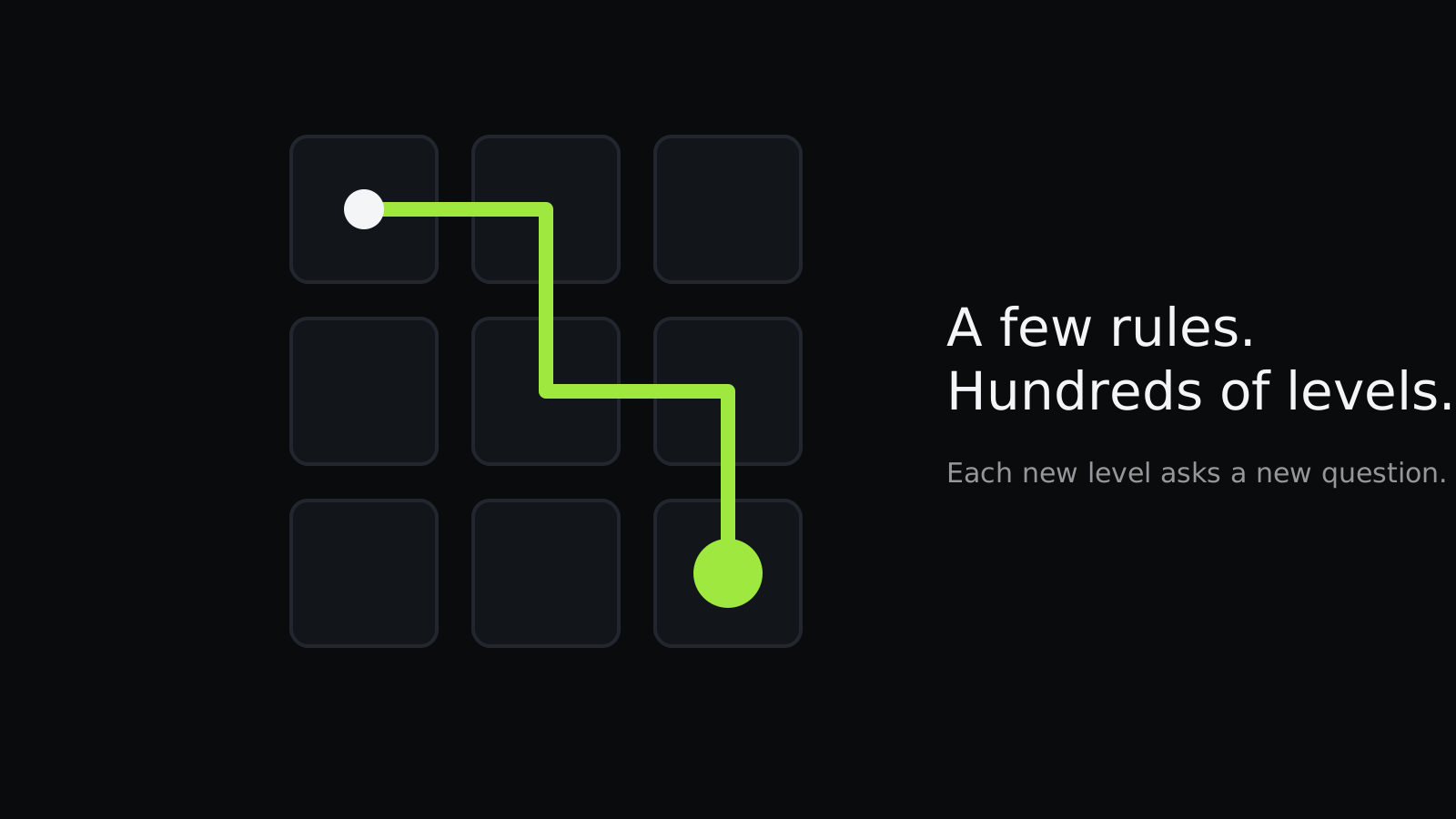
The strongest puzzle-flavored hyper-casual games add one new rule at a time instead of stacking many at once. A handful of rules can support hundreds of levels, and each level stays easy to read at a glance. Arrow Cube: Slide Puzzle is built around exactly one rule — tap an arrow and it slides off in the direction it points, unless something blocks it — and that single rule carries 100+ levels.
For a related look at the pacing side, read our post on the core mechanics players keep coming back to.
Further reading: 5 Hyper-Casual Mechanics Players Keep Coming Back To and One-Tap Controls: The Design Discipline Behind Hyper-Casual Games.