5 Hyper-Casual Mechanics Players Keep Coming Back To
By Plarmes
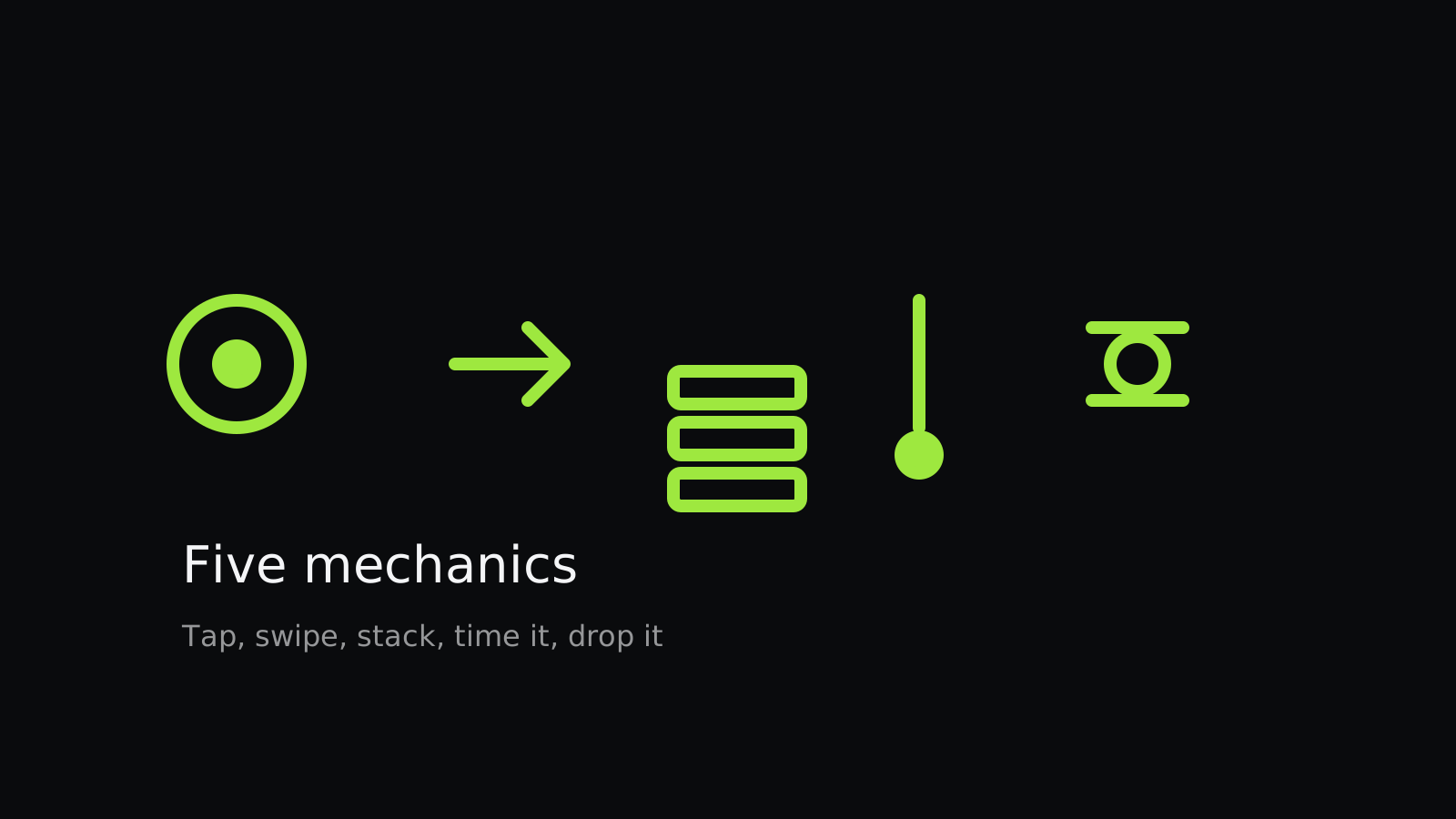
Hyper-casual games live or die in the first ten seconds. If a player does not understand the loop before their thumb leaves the screen, the app gets deleted before the tutorial even finishes. After watching hundreds of titles rise and fall on the charts, a small set of mechanics keeps resurfacing at the top.
1. One-input timing
Games built around a single tap or release strip control down to its essentials. There is no joystick, no menu to learn, nothing standing between the player and the action. The skill ceiling comes entirely from timing, which means a five-year-old and a competitive player are running the exact same test of reflexes.
2. Visible physics failure
When a tower wobbles or a block slides off the edge, the player needs to see exactly why they lost. Physics-driven failure reads as fair in a way that random number generators never do. Players blame their timing, not the game, and that is what brings them back for one more run.
3. Escalating, readable difficulty
The best hyper-casual loops raise the stakes in a way the player can feel without reading a single line of text. Faster waves, narrower gaps, tighter timing windows. The curve should be steep enough to end runs quickly but never so steep that a loss feels arbitrary.
4. A session that fits a bathroom break
Two to three minutes per session is the sweet spot. Long enough to feel like progress happened, short enough that picking the phone back up costs nothing. Games that stretch sessions past five minutes tend to lose players to fatigue rather than boredom.
5. A meta-goal that costs nothing to check
A streak counter, a best score, a next unlock two runs away. None of these need a login or a tutorial. They just need to be visible the moment the run ends, so the decision to play again happens before the player has time to close the app.
None of these mechanics are exclusive to any one studio. What separates a chart-topper from a forgotten download is how tightly the mechanic, the failure state, and the session length are tuned against each other. Get that tuning right and the rest of the game can be almost embarrassingly simple.
Further reading: One-Tap Controls: The Design Discipline Behind Hyper-Casual Games and Difficulty Curves in Hyper-Casual Games: Why Level 40 Should Not Feel Like Level 4.