Difficulty Curves in Hyper-Casual Games: Why Level 40 Should Not Feel Like Level 4
By Plarmes
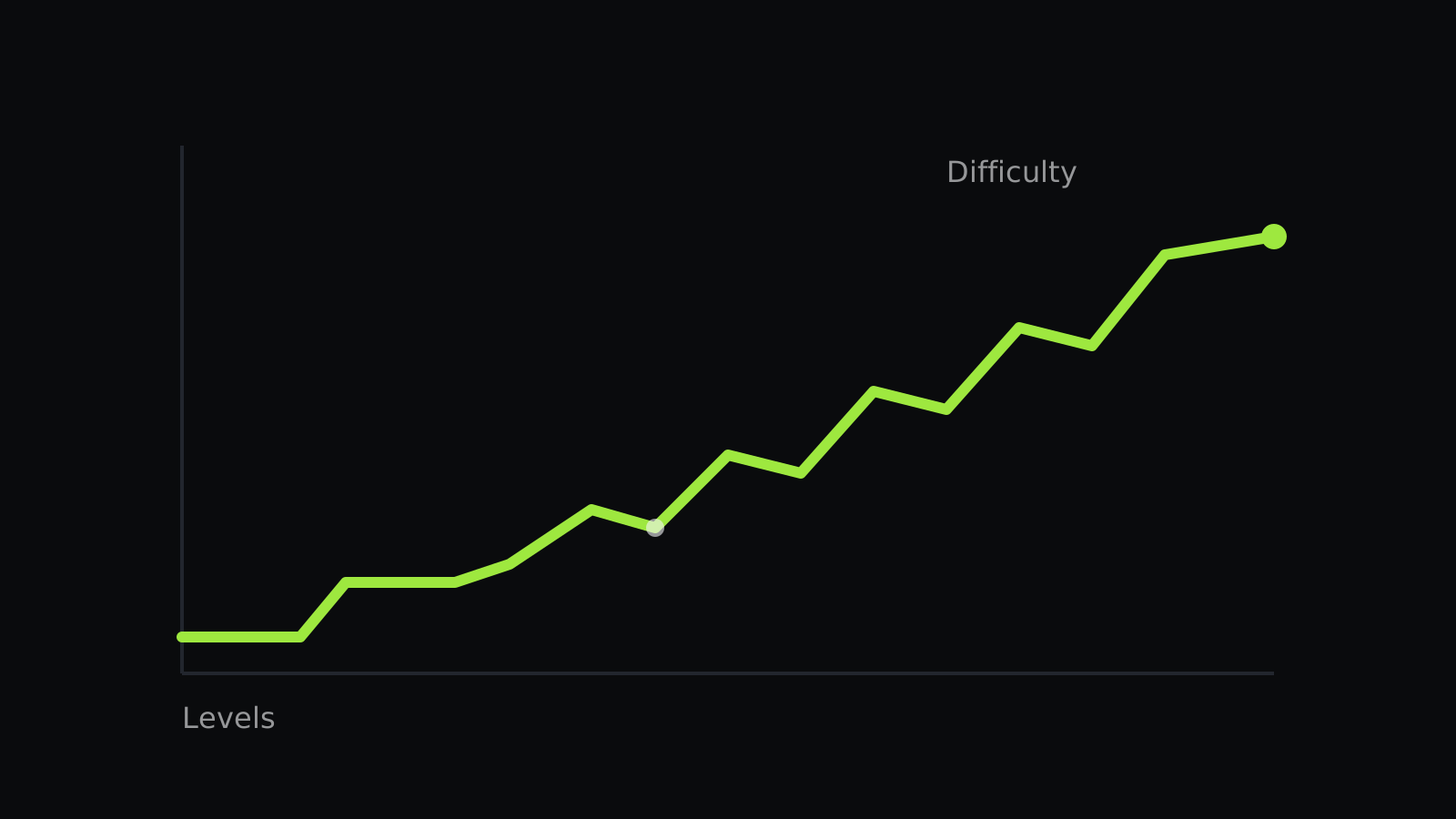
A difficulty curve is the shape of challenge across a game. In a hyper-casual game, the curve often decides whether a player keeps going after a few minutes or quits at a wall they did not see coming.
Spikes lose players, plateaus bore them
A good curve rises steadily with brief dips. A sudden spike, where a level asks for several new skills at once, makes players feel stuck. A flat stretch, where every level feels the same, makes them feel the game has stopped teaching them anything.
Introduce one idea at a time
Each new mechanic should get a short run of levels where it is the only real question. Once a player is comfortable with it, mixed levels can combine it with earlier ideas. The order of introduction matters more than the number of ideas. BrainBeam: Laser Puzzle paces this through its chapters: mirrors first, then prisms, then color shifters, each getting its own run of levels before the game starts mixing them.
Use easy levels as rest
An easy level is not wasted content. It lets the player feel capable, which makes the next harder level feel fair. Treat easy levels as deliberate breathing room.
Test with people who have never seen the game
Designers become experts in their own game quickly, so their sense of difficulty is unreliable. Watch new players. Note where they pause, where they give up, and where they replay a level without being asked.
Tune the level that loses the most players
After launch, analytics show where players drop off. Start with the level that loses the most players, adjust it, and leave the rest alone until the data points elsewhere.
For the design of the controls that make these curves possible, read our post on one-tap controls.
Further reading: Timers in Mobile Games: Pressure Without Panic and 5 Hyper-Casual Mechanics Players Keep Coming Back To.